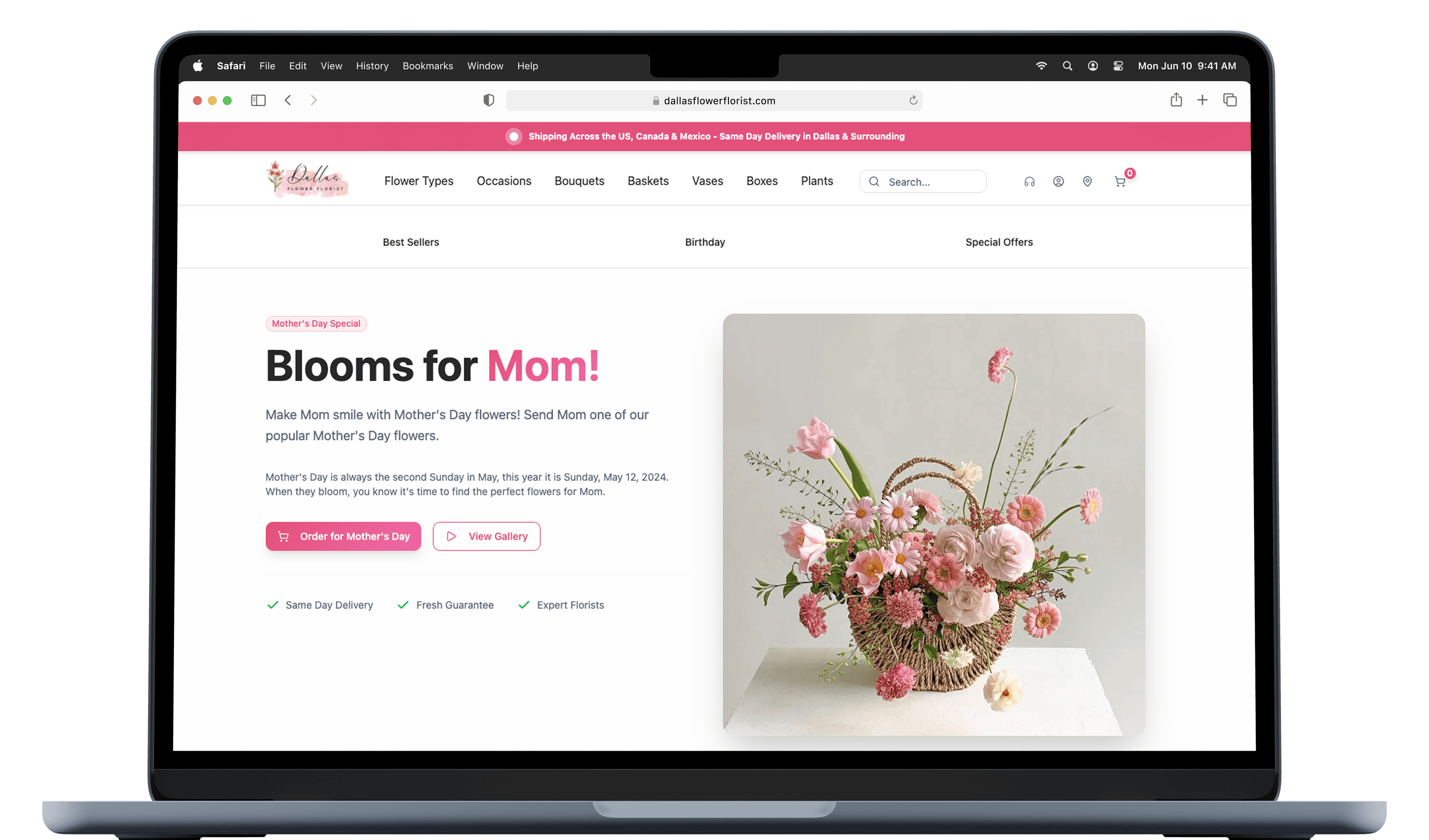
Dallas Flower Florist
:Turning digital shopping into a personal, emotional connection!
The main goal of this project was to redesign a florist e-commerce website for a seamless omnichannel experience.
Role
UX Researcher & Designer
Industry
E-Commerce / Retail
Team
3 UX/UI Designers
Duration
10 Weeks
Research
Empathize
Design
Testing
Reflection
Phase 1. Intro, Current Experience & Design Motivation
Dallas Flower Florist is a long-established local flower shop in Dallas, offering high-quality floral arrangements for local and cross-border customers in the U.S., Canada, and Mexico.
While the business thrived offline thanks to its craftsmanship and personalized service, its online experience failed to reflect that same care and credibility.
The redesign aimed to bridge this gap — translating the warmth and trust of an in-store florist into a seamless, scalable digital experience.
Problem & Challenges
Lack of trust and professionalism:
Outdated UI design, low-quality images, and inconsistent branding made the website look unreliable and outdated.
Unclear service and product value:
Users struggled to understand delivery options (local vs. international) and couldn’t clearly perceive the value or uniqueness of each product.
Complicated ordering process:
The checkout journey was long and confusing, requiring too many manual steps and form entries.
No transparency in order tracking:
Users had no visibility into their order’s progress, especially when fulfilled by partner florists.
Disconnection between offline and online experience:
The warmth, care, and personal touch of the physical store were missing from the digital journey.
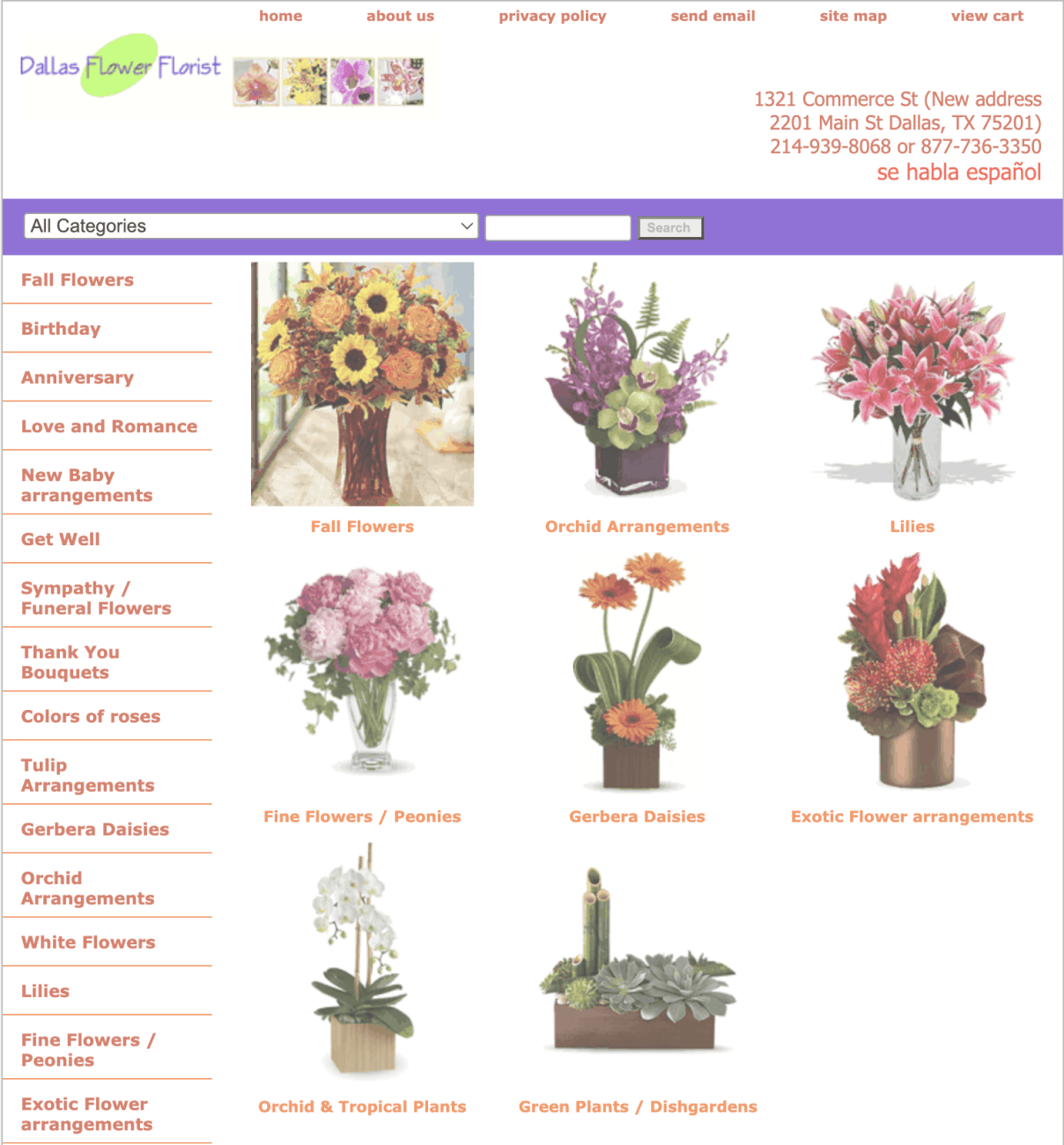
Original website interface
Objective
To redesign the Dallas Flower Florist website into a seamless, culturally-sensitive omnichannel experience that:
Builds trust and clarity for users through improved visual communication and transparency.
Reflects the personal touch and quality assurance of the local Dallas florist.
Supports scalable operations with international partners while maintaining brand consistency.
Phase 2. Research - Interviews & Competitor Analysis
We started the research phase by exploring how users currently browse, choose, and order flowers — and what stops them from completing a purchase confidently.
Research Goals
Understand how customers browse and order flowers online
Identify confusion around delivery options and product categories
Discover usability pain points affecting mobile users
Analyze how competitors communicate similar multi-region delivery services
Validate the need for clearer product information and a simpler checkout flow
Interviewing online flower senders
Clear product information and flower categories were most important.
Delivery options, order tracking, payment, and customer service followed closely.
Add-ons and promotions were seen as nice-to-have, not essential.
Key insights identified through interviews, affinity mapping, and dot voting:
8
Interview
Responses
How are the competitor websites?
Competitor analysis revealed industry-wide gaps in personalization and delivery transparency, shaping the UX focus for
the redesign.
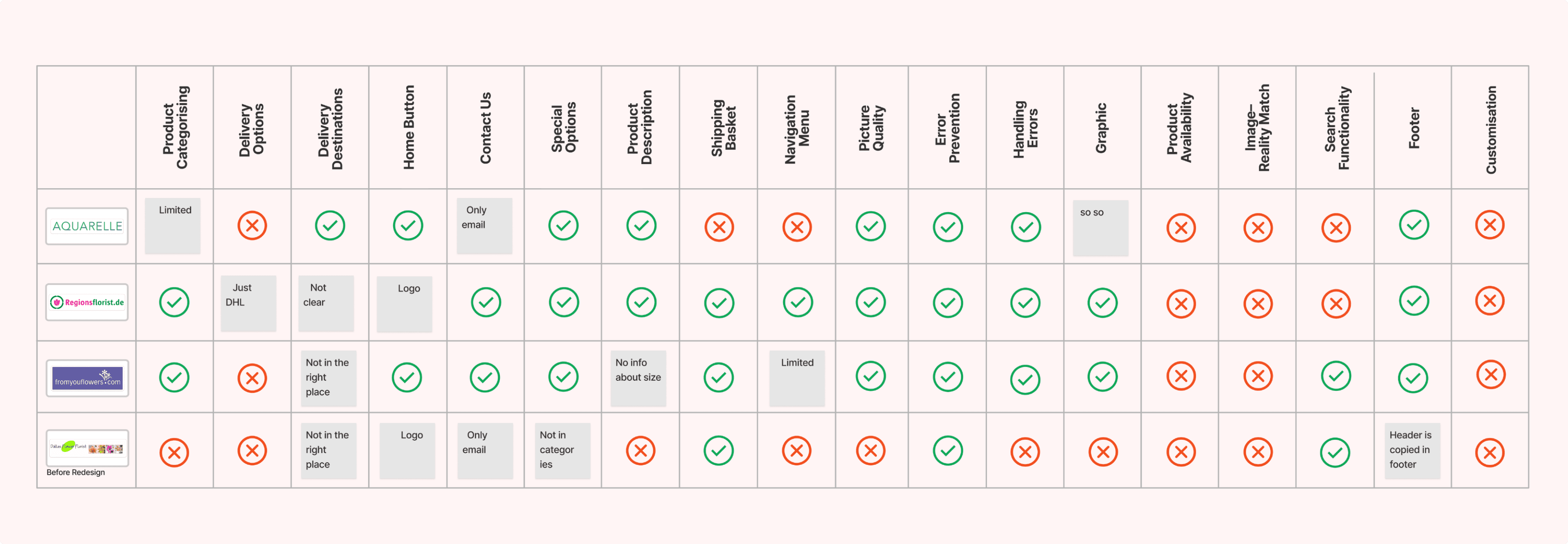
Comparing features between top online florist websites
Phase 3. Building User Empathy
Based on the research insights, we entered the Empathize phase to translate findings into user-centered visuals and define the foundation for personas.
Persona Development
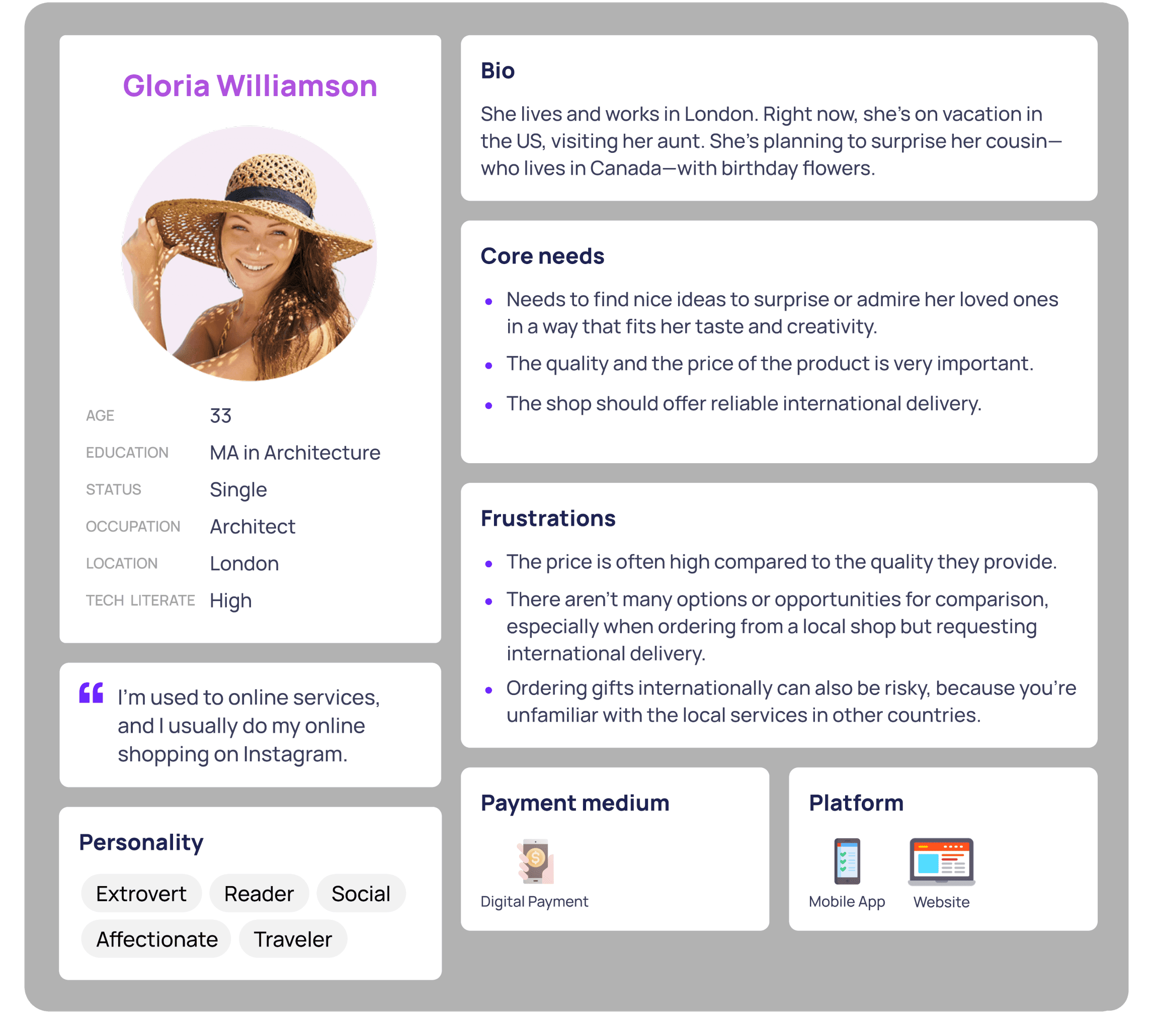
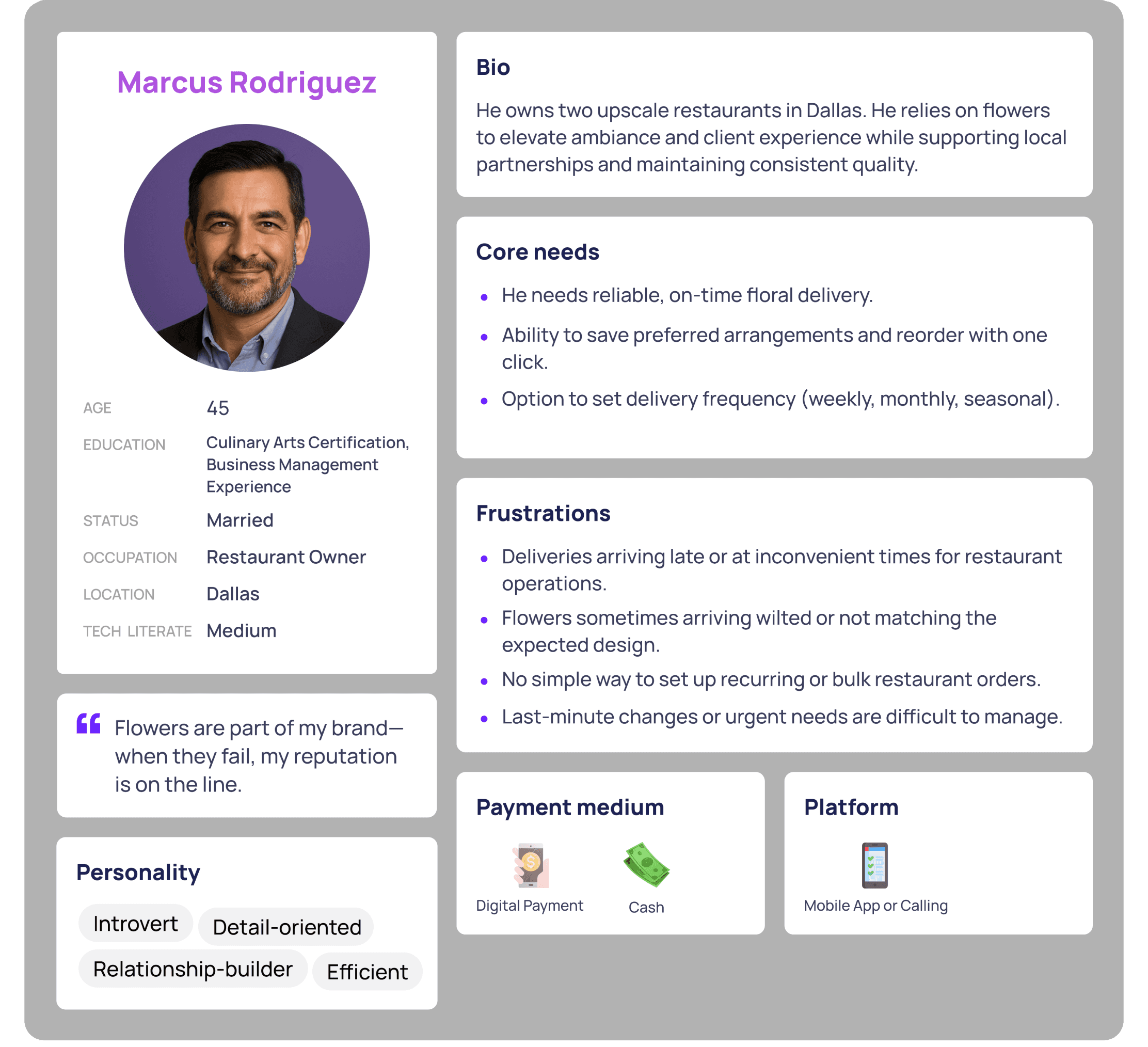
Synthesizing the research insights led to the development of two key personas — an individual customer purchasing flowers for personal occasions, and a business client seeking arrangements for branding or hospitality needs. These personas helped humanize the data, ensuring that every design decision was rooted in empathy and real user motivations.
The primary persona
The secondary persona
Customer Journey Map (CJM)
To better understand the end-to-end customer experience, I created a journey map based on the primary persona, Gloria. The map visualizes her actions, thoughts, and emotions while ordering flowers online — from discovering Dallas Flower Florist to the final delivery of a bouquet to her cousin in Toronto.
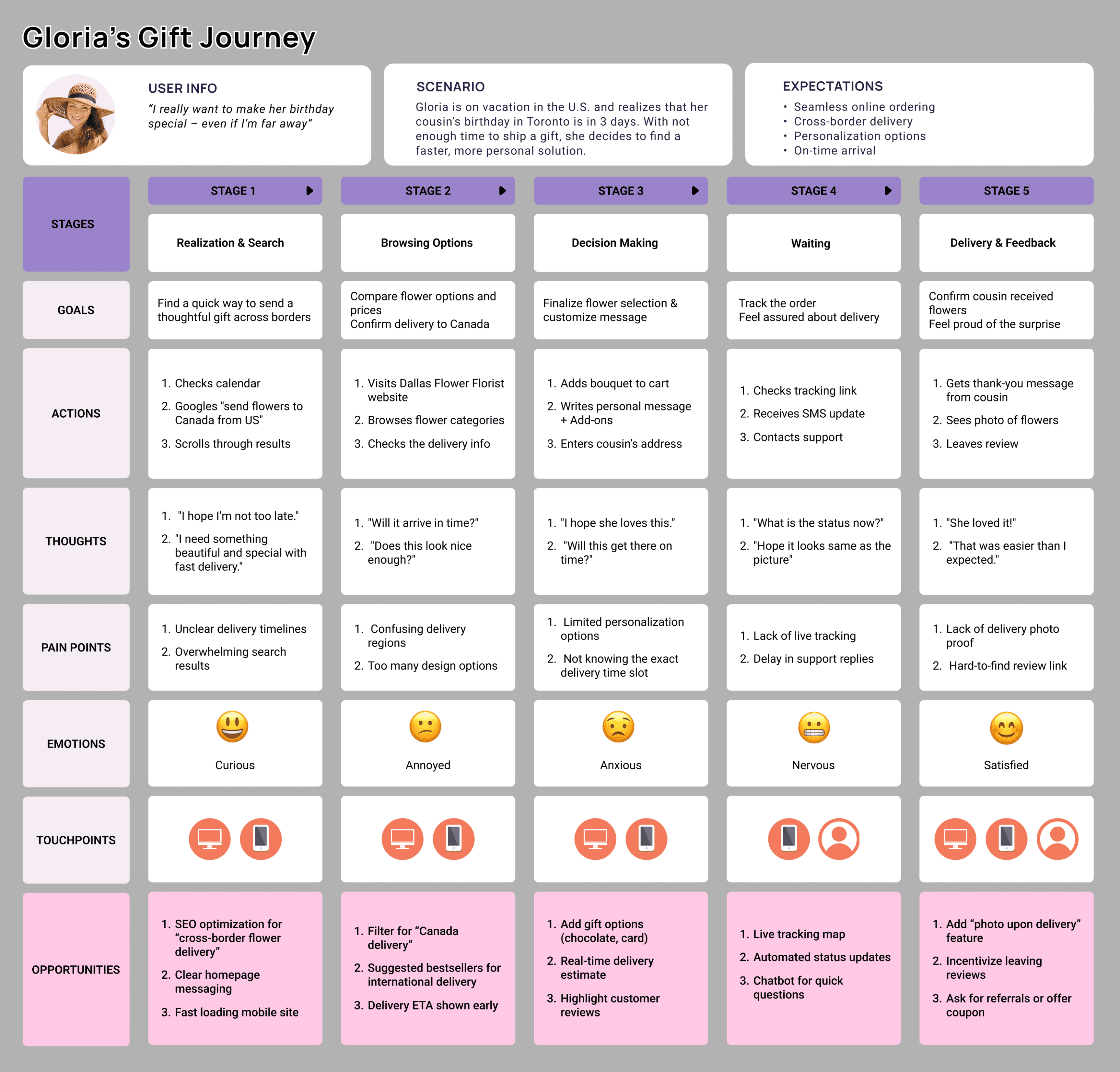
CJM
Phase 4. Design & Prototype
User Flow
To improve user experience, Dallas Flower Florist should implement adaptive user flows tailored to different customer segments. Returning customers like Marcus need streamlined reordering with saved preferences, while new users like Gloria require guided experiences covering delivery options and cultural considerations.
Scenario
1
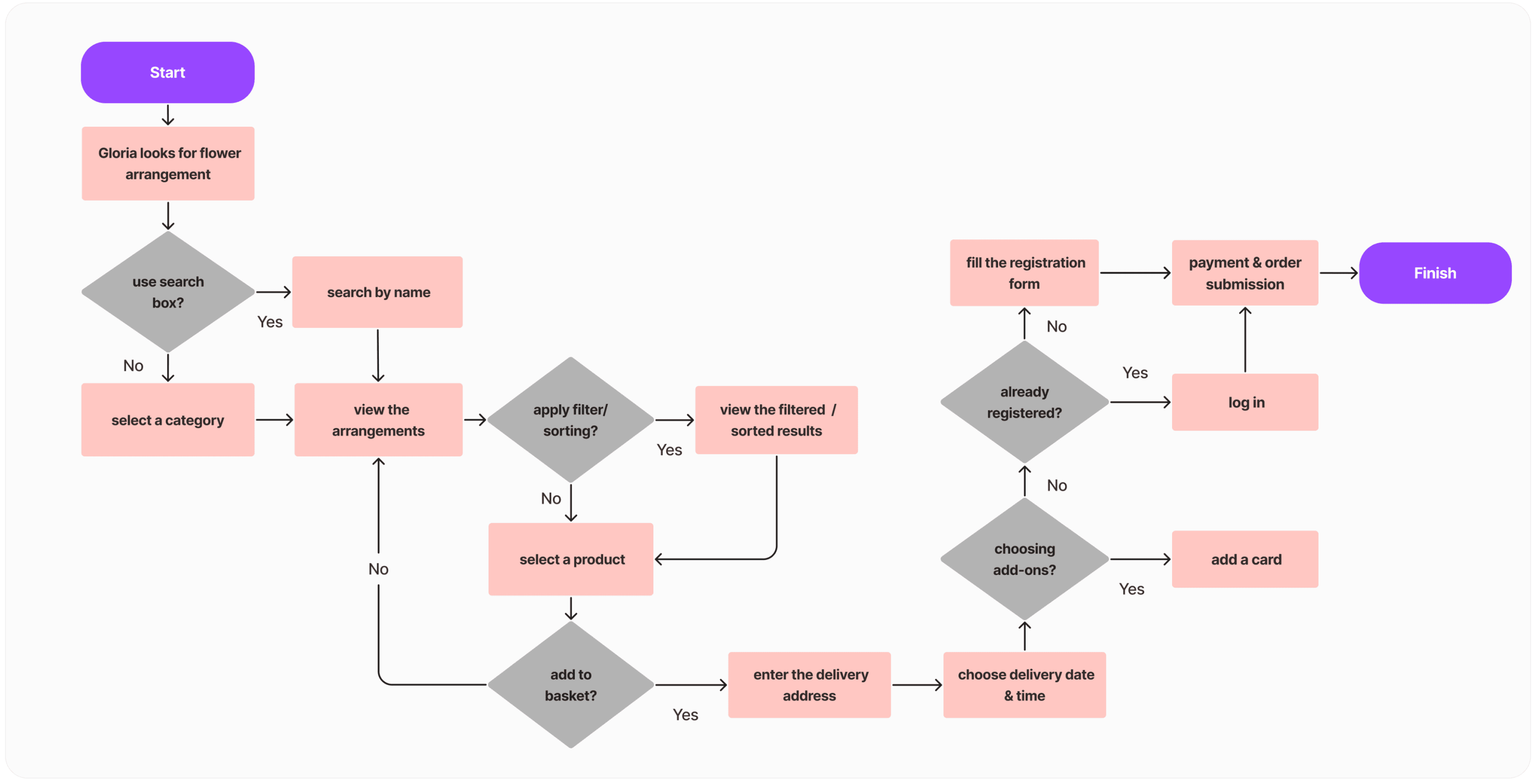
User Flow Diagram 1
Scenario
2
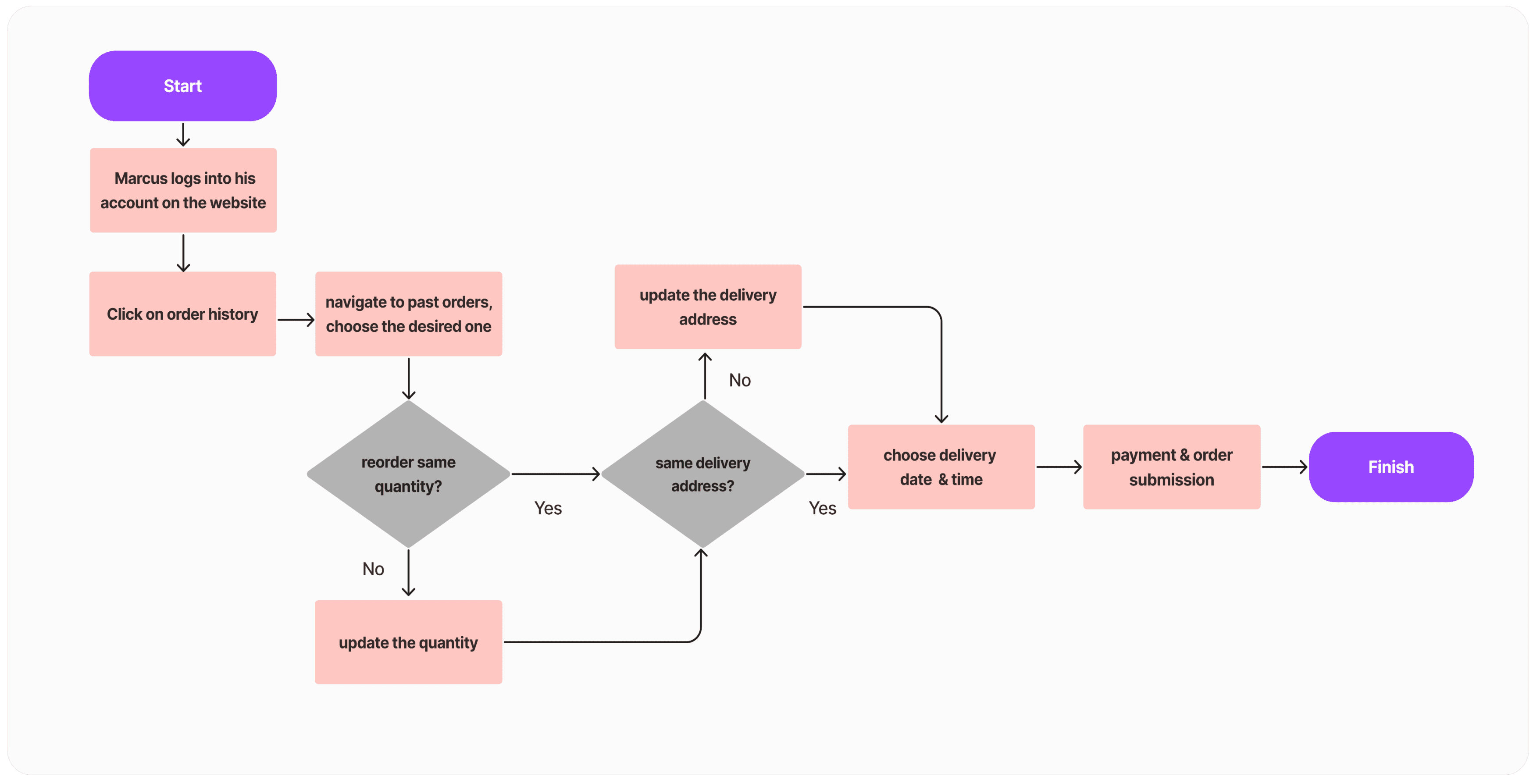
User Flow Diagram 2
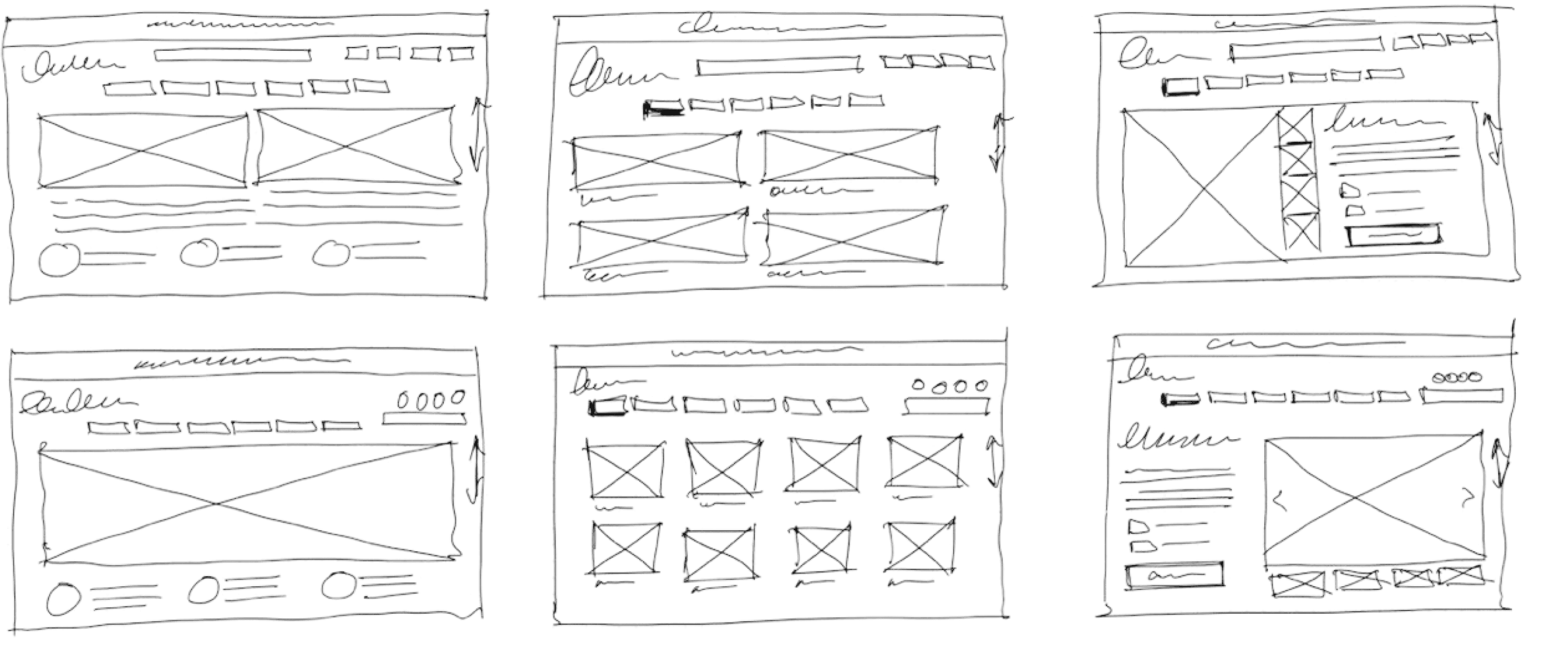
Prototype - from Lo-Fi Sketches to Hi-Fi Design
Early design ideas were visualized through low-fidelity sketches, as shown bellow.
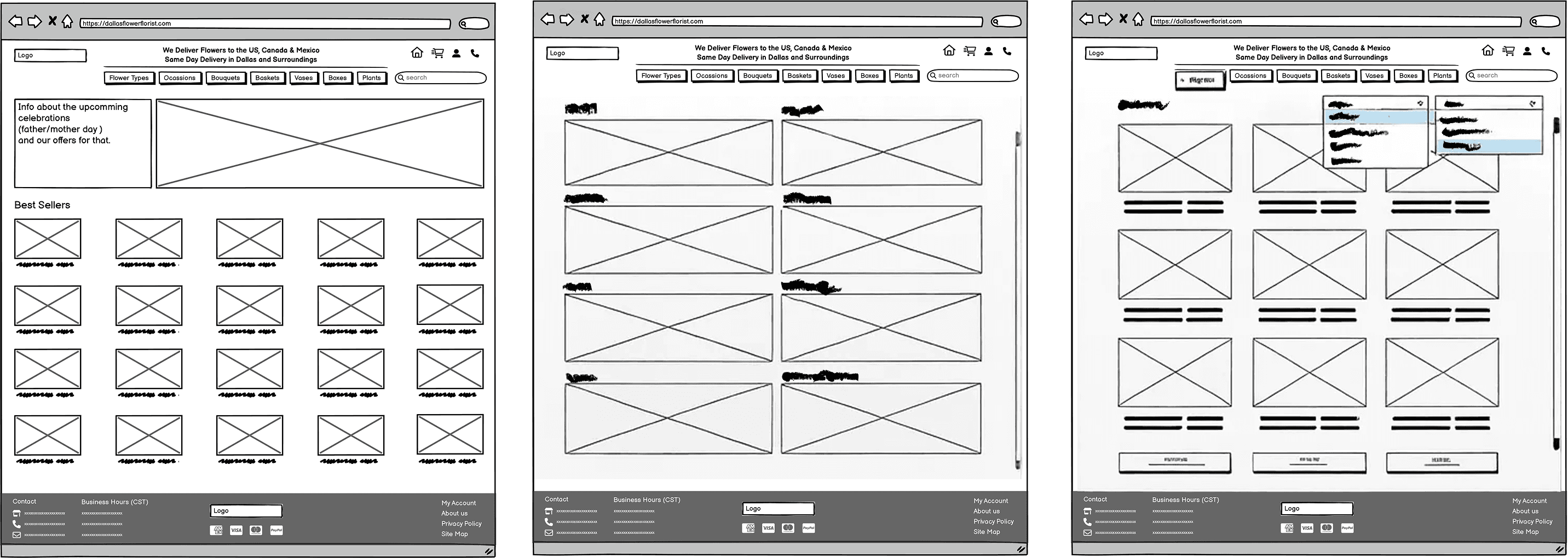
The concept was refined into mid-fidelity wireframes.
The first high-fidelity concepts translate the wireframes into a polished interface, focusing on typography, color, hierarchy, and interaction details.

Phase 5. Usability Testing
Approach
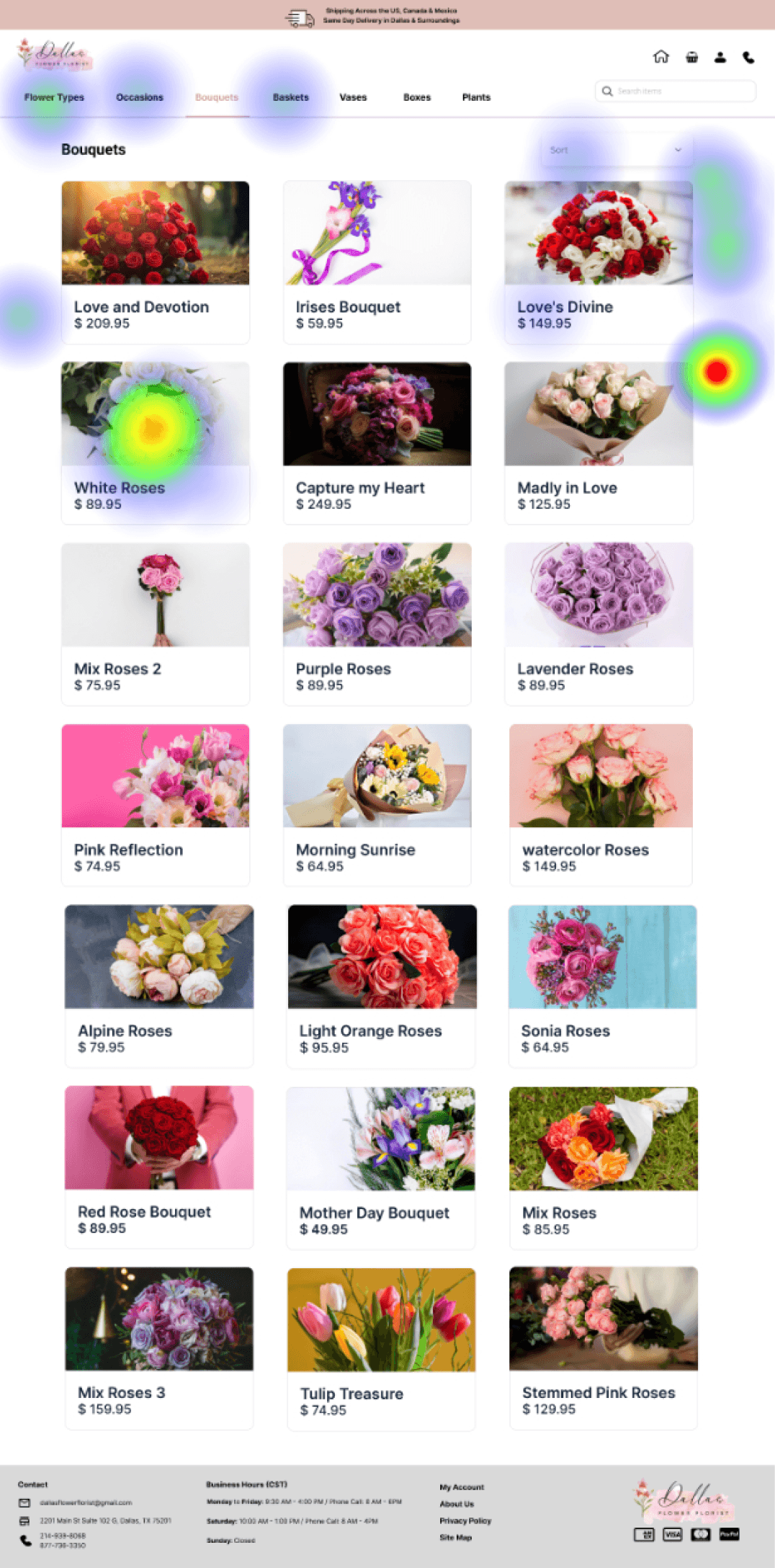
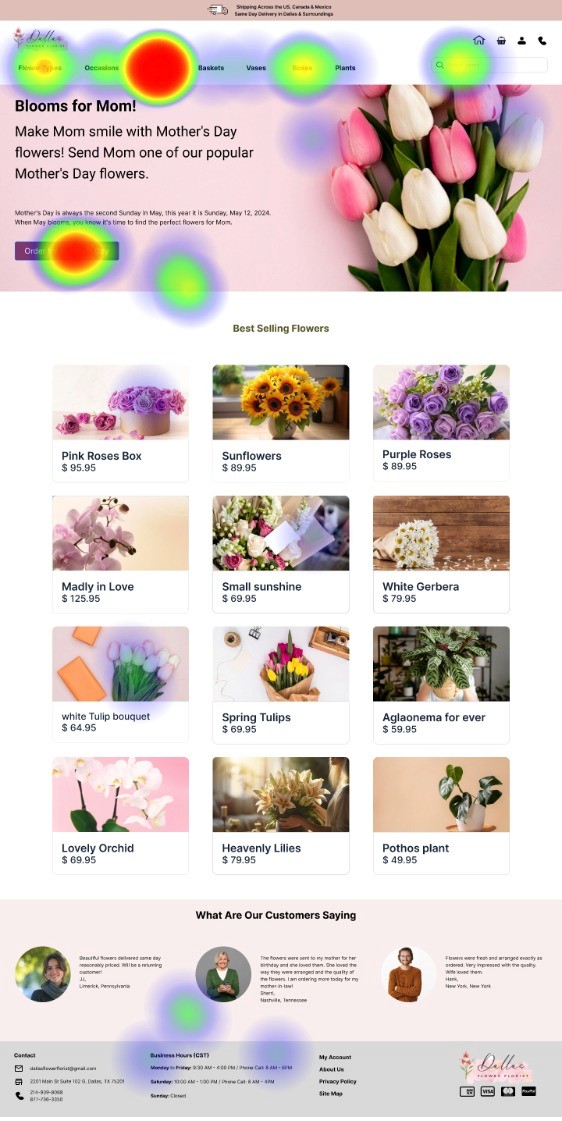
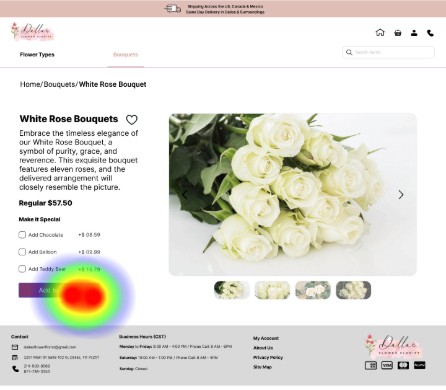
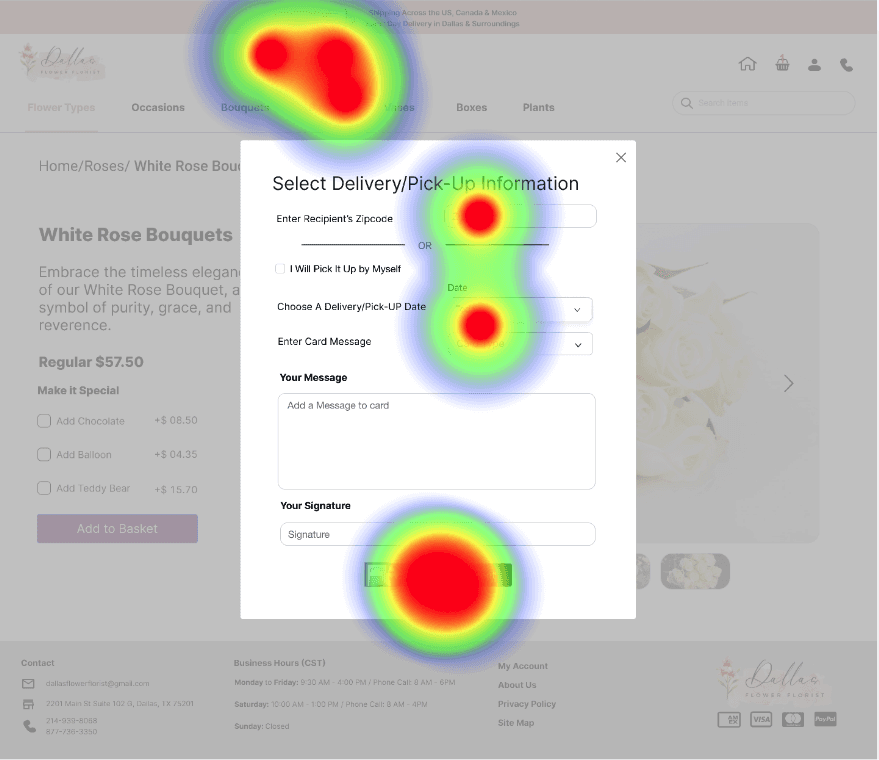
A moderated usability test was conducted to observe user behavior and collect qualitative insights while guiding participants through a realistic ordering task. Participants were asked to order a white rose bouquet (US location) without selecting any add-ons, using the think-aloud method. A total of 38 participants completed the test, allowing us to identify both common behavior patterns and edge-case interactions.
High Curiosity-Driven Misclicks
Despite clear instructions, the promotional button continued to attract unintended clicks, suggesting issues with visual hierarchy and attention guidance.
Strong Product Page Performance
Users clearly understood bouquet details, pricing, and add-on options, completing this step with ease.
Delivery Page Needs Refinement
Although most users progressed successfully, repeated clicks in the top-left area point to layout or cueing problems that may require adjustment.
Key findings
Phase 5. Usability Testing
Key Findings
High Curiosity-Driven Misclicks
Despite clear instructions, the promotional button continued to attract unintended
clicks, suggesting issues with visual hierarchy and attention guidance.
Strong Product Page Performance
Users clearly understood bouquet details, pricing, and add-on options, completing
this step with ease.
Delivery Page Needs Refinement
Although most users progressed successfully, repeated clicks in the top-left area
point to layout or cueing problems that may require adjustment.
Phase 6. High-fidelity Screen Design & Prototype
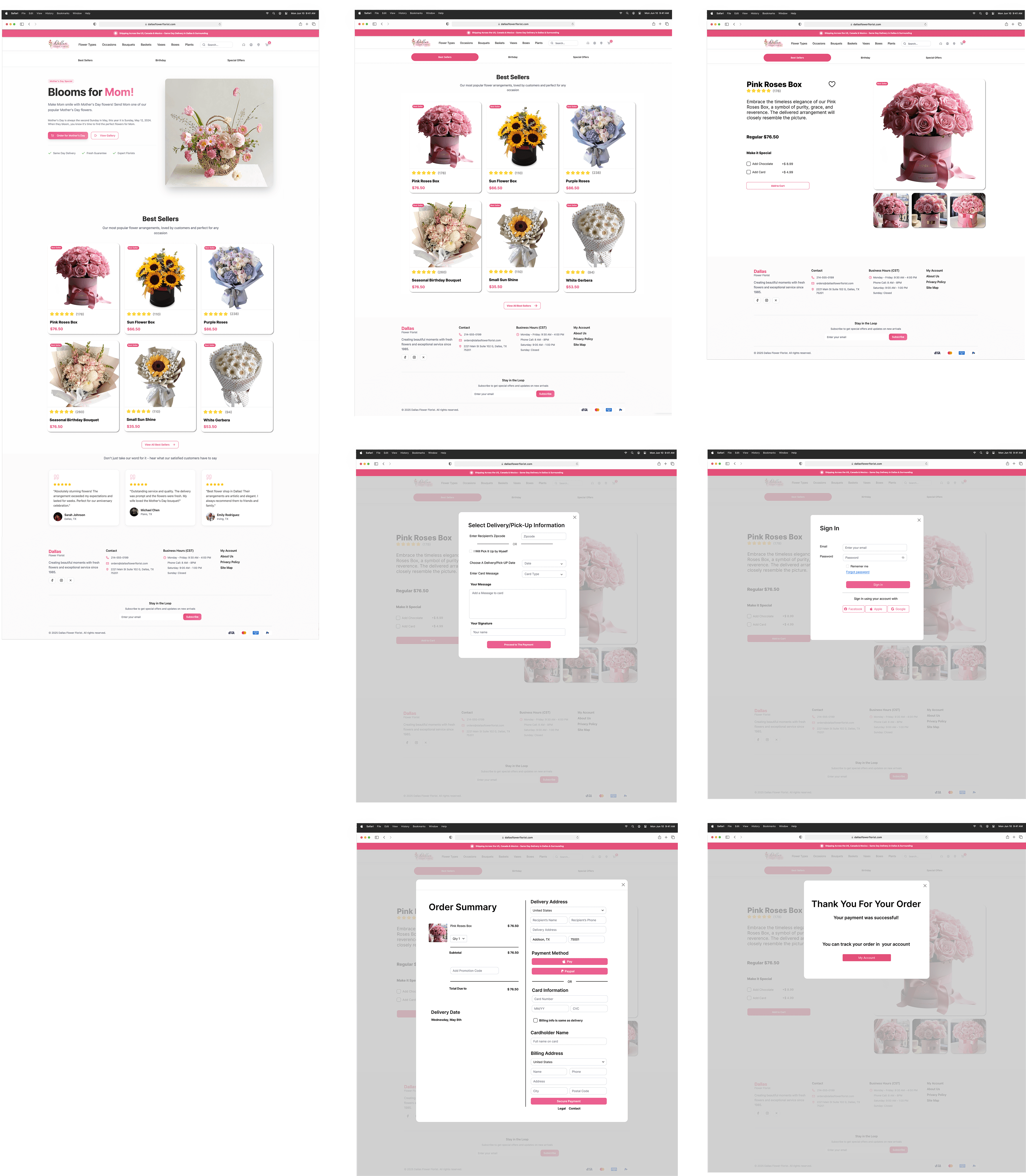
The prototype underwent multiple refinement cycles based on usability insights, leading to a final version that enhances homepage clarity and strengthens usability across both the product and delivery flows.